
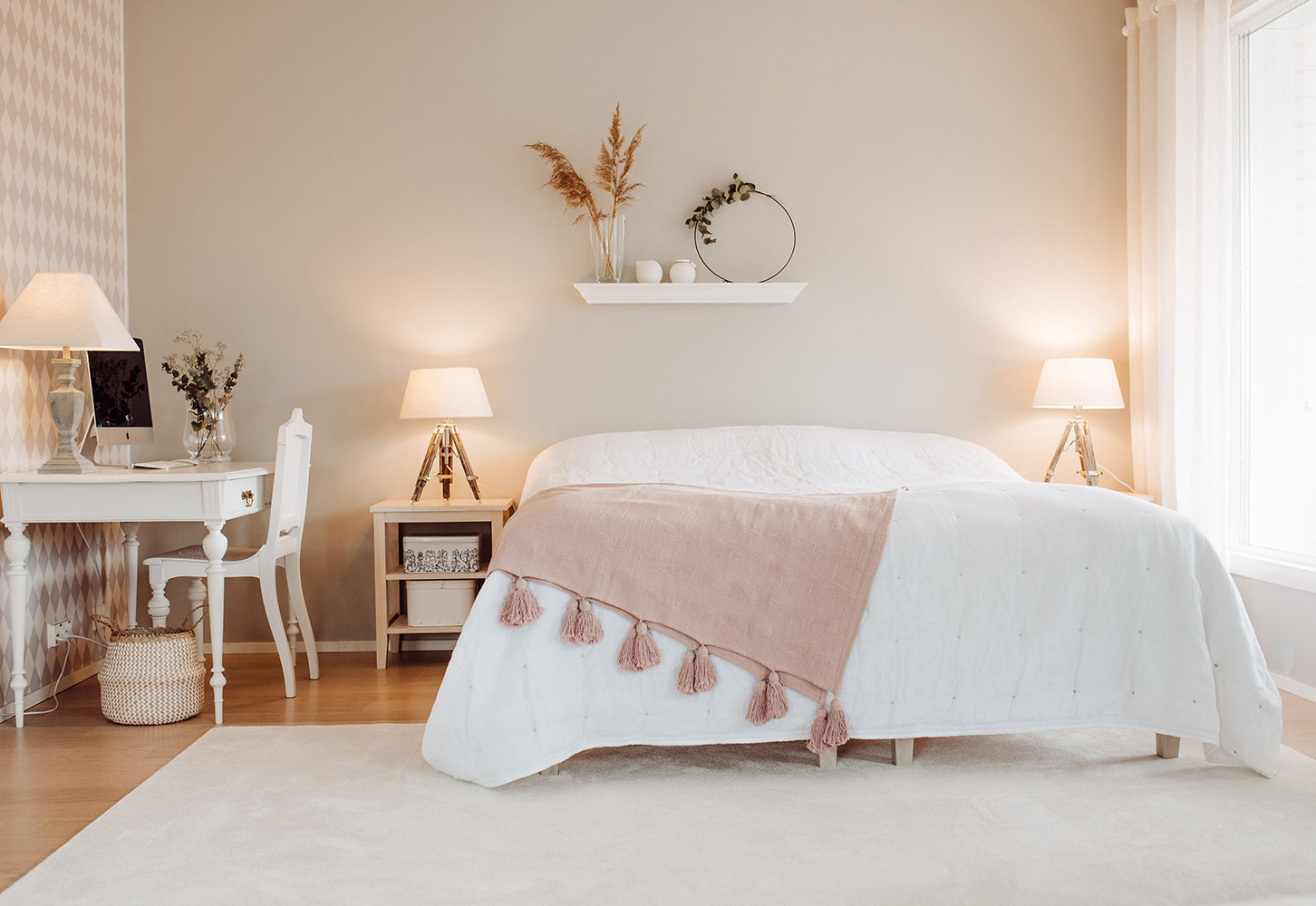
A bedroom rug brings warmth and softness to the space. Choose the right material, size and colour for a comfortable sleeping environment. Wool offers natural warmth, polyamide provides durability, and 2023 trend colours favour nature-inspired shades. Discover the Hattara rug, which perfectly combines softness and easy care for the bedroom.
The bedroom is a place for relaxation and rest, where the choice of rug significantly affects the atmosphere and comfort of the space. A soft rug brings warmth to the bedroom, reduces echoes, and creates a cozy ambiance. Choosing the right material, softness, size, and color depends on both practical needs and personal preferences. A quality bedroom rug is an investment that improves the sleeping environment and the overall appearance of the space.
The best materials for the bedroom are soft, warm, and pleasant-feeling materials that create a calm atmosphere. Wool is an excellent choice due to its natural thermal insulation, durability, and dirt-repelling properties. Polyamide, on the other hand, offers durability and easy maintenance, making it ideal for families with children.
A wool rug is a natural choice for the bedroom. Its soft surface feels pleasant under bare feet, and as a natural fiber, wool maintains the room’s moisture balance.
Rugs made from polyamide, such as the Hattara rug, are an excellent alternative especially for families with children. Polyamide withstands wear well, is easy to clean, and maintains its softness for a long time. The Hattara rug is short-pile but still wonderfully soft, making it a perfect choice for a bedroom where both comfort and practicality are valued.
Cotton is a pleasant option due to its natural softness, but it doesn’t withstand wear as well as wool or polyamide. A cotton rug is suitable for a bedroom without heavy traffic.
The softness of a bedroom rug is most influenced by pile length, material density, and backing. A long-pile rug feels luxuriously soft underfoot, while a short-pile rug is easier to maintain but still pleasantly soft. Material density affects both the rug’s feel and durability.
The rug’s backing is an extremely important factor for both softness and practicality. Quality backing makes the rug sturdy and keeps it in place, which is especially important in the bedroom where the rug is often placed beside the bed. Good backing also adds to the rug’s softness and comfort. Be sure to check out the Hattara rug, whose quality backing ensures both pleasant softness and excellent stability.
In the bedroom, it’s particularly worth favoring soft rugs if you often get up at night or in the morning with bare feet. A soft rug creates a warm and comfortable feeling immediately upon waking, making morning routines more pleasant. Additionally, a soft rug dampens footstep sounds, which is useful especially when couples go to bed or wake up at different times.
Bedroom rugs favor nature-inspired and calming shades that create a peaceful atmosphere. Alongside earthy beige and gray tones, soft pastels and deeper, muted colors have emerged. Nordic interior design style continues to emphasize minimalism and timeless elegance.
The most popular colors for bedroom rugs are:
In patterns, subdued and calm alternatives are favored, supporting the bedroom’s relaxing atmosphere. Geometric patterns are still popular, but they are softer and more subtle than before. Abstract, nature-inspired patterns and textures bring interest without dominating the space.
Nordic interior design style is strongly reflected in rug choices. We favor clean lines, natural materials, and harmonious colors. Domestic quality and sustainability are values that guide an increasing number of consumer choices. Amidst the trends, however, it’s worth remembering that a bedroom rug is a long-term purchase, so a timeless style is often a better choice than a quickly changing trend.
The size of a bedroom rug depends on the room’s dimensions, bed size, and placement. As a general rule, the rug should extend at least 50-70 cm beyond the bed’s edges so that feet land on a soft surface when getting up. In small bedrooms, rugs placed beside the bed work well, while in large spaces, the rug can extend under the bed.
Custom-made rugs are an excellent solution when standard sizes don’t fit the space perfectly. They allow the rug to be tailored precisely to the room and furniture dimensions. Especially in asymmetrical rooms or unusually shaped spaces, a custom-made rug may be the only viable option.
There are several options for rug placement. The most common way is to position the rug so that it extends from under the bed about 50-70 cm to the sides and foot. Another popular option is to place the rug only partially under the bed, starting from the foot end. In small rooms, separate small rugs can also be used on both sides of the bed.
Regular care of a bedroom rug extends its lifespan and keeps it fresh. Basic care includes regular vacuuming 1-2 times per week, which removes dust and loose dirt. Airing refreshes the rug and removes odors, and this should be done several times a year.
All VM Carpet rugs are washable (surface wash 30 °C), except sisal rugs, which must not be washed with water. For washing and stain removal, we recommend detergents designed for textiles. Avoid dish soap, soaps, and machine washing, as these are not suitable for these rugs.
Speed is key in stain treatment. Remove liquids immediately with absorbent paper or a towel, don’t rub. Use lukewarm water and textile detergent for stain removal. Always test cleaning agents first on an inconspicuous spot. The Hattara rug is a particularly easy-care choice for the bedroom, as its polyamide material withstands cleaning well and maintains its appearance year after year.
A rug functions as an effective sound-dampening element in the bedroom. It reduces footstep sounds, echoes, and the reflection of other sounds from hard surfaces. A thicker and denser rug dampens sounds more effectively, making the bedroom a calmer and quieter environment.
The rug’s effect on acoustics is significant especially in rooms with many hard surfaces such as parquet or laminate flooring. Even a relatively small rug can significantly improve the room’s acoustics. This is particularly important in the bedroom, where good sound insulation supports a peaceful sleeping environment.
In terms of thermal insulation, material choices in rugs have great significance. Wool is a natural thermal insulator that feels warm underfoot regardless of the season. Polyamide rugs warm up quickly, making them pleasant on cold mornings. Cotton feels cooler, which can be an advantage during summer.
Almost all our rugs are excellently suited for rooms with underfloor heating. Quality backing is designed to let heat through efficiently. This is an important feature in bedrooms where comfort is a priority. The Hattara rug works particularly well with underfloor heating, providing a pleasantly warm surface underfoot.
A bedroom rug is much more than a decorative element – it’s an essential part of a functional, cozy, and healthy sleeping environment. From VM Carpet, you’ll find quality, domestic rug options for different types of bedrooms. Contact us, and we’ll help you find the perfect rug for your bedroom!
Etsitään yhdessä vastaus kysymykseesi. Saat tukea chatissa ja verkkosivuillamme.